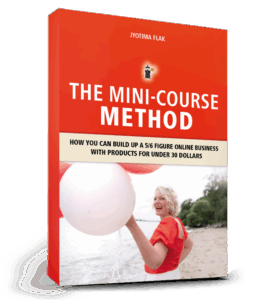
Over the past few years, my Mini-Course Method has helped me scale my online business and double my revenue consistently. I still remember the moment I saw the numbers — it was unbelievable! 😊 But what exactly makes the Mini-Course Method by Jyotima Flak so effective, and why should you consider applying it in your business?
In this blog, I’ll walk you through what mini-courses are, why they work, and how you can start creating your first digital products today — even with limited time, no audience, and minimal tech skills.
What Are Mini-Courses?
Before diving into the benefits, it’s important to understand the concept:
“Mini-Courses — also called Tiny Offers — are small, affordable online products that customers can buy directly from an ad or landing page without overthinking it.” — Jyotima Flak
Mini-courses are typically priced between $5–70 and are designed to provide a fast, high-value solution for your audience. They are small, actionable, and highly effective for both sales and customer engagement.
The Challenge for Many Coaches and Creators
Many coaches, therapists, and content creators have excellent knowledge and experience but struggle to reach a wider audience. Often, the first few months of online business involve:
Spending excessive time creating free content
Hosting free webinars and workshops
Investing heavily in ads
Even after months of effort, many struggle to make their first few sales. The main problem? Building trust. High-ticket products require significant credibility and reassurance before a new customer is willing to buy. This is where mini-courses come in — they let your product speak for itself.
How the Mini-Course Method Works
Instead of building a traditional high-ticket sales funnel — which often involves complex ads, free webinars, and weeks of content creation — you can launch a mini-course in just one day. Here’s why it works:
Small but complete: Your course doesn’t need to be massive. It just needs to solve a specific problem or provide an actionable outcome.
Affordable entry: Mini-courses are priced low enough to encourage impulsive purchases while still delivering immense value.
Fast results: Customers get quick wins, and you start generating revenue immediately.
Mini-courses can take many formats: eBooks, online courses, workshops, audio programs, or meditations. The key is to make them actionable and enjoyable — your audience should leave the course feeling accomplished and ready to engage further with your brand.
3 Key Benefits of the Mini-Course Method
Instant Revenue Boost: Unlike waiting months to sell your first course, mini-courses generate income immediately. Even small products create cash flow and validate your ideas.
Build a Successful Sales Funnel: Mini-courses help you build an email list of paying customers, not just leads. This makes upsells, follow-up courses, and coaching offers far easier to sell.
Create Superfans and Brand Advocates: When customers enjoy your mini-course, they become loyal supporters who are eager for your next launch and often recommend your products to others.
Step-by-Step: Launch Your Mini-Course
Here’s a simple framework to get started:
Pick a problem to solve: Identify a common challenge your audience faces. Example: “How to set up your first Instagram ad campaign” or “Daily grounding meditation for stress relief.”
Create your mini-course: Use your expertise to produce a small, actionable guide or video series. Aim for 1–3 lessons that your audience can complete quickly.
Promote and sell: Share your mini-course on social media, email lists, and your website. Start with one simple ad or post to test demand.
Upsell and expand: After your mini-course sells, offer additional products, coaching sessions, or memberships to create a full product suite.
Examples of Mini-Courses
“Find Your First Coaching Niche in 3 Days”
“Morning Grounding Ritual for Busy Professionals”
“Quick Start Guide to Passive Income Online”
“Social Media Content Templates for Coaches”
Ready to Launch Your First Mini-Course?
If you’re serious about growing your online business, I highly recommend checking out my book The Mini-Course Method. Inside, you’ll learn:
How to create your first mini-course
How to structure your mini-course sales funnel
How to generate passive income with small digital products
How to establish authority and gain superfans quickly
Have you ever felt overwhelmed by the idea of selling your digital products online? Maybe you thought it would feel pushy or technically complicated. I completely understand – I’ve been there myself. When I started, I had zero tech skills, no big audience, and just 25 hours a week while homeschooling my daughter. And yet, I built a six-figure online business with a simple, heart-led strategy called the digital product ladder.
In this blog, I’ll walk you through everything: how to transform one core idea into a full suite of digital products that your audience will naturally want to buy, step by step, without feeling salesy, and how to automate the process so your business grows even when you’re busy living your life.
What is a Digital Product Ladder?
A digital product ladder is essentially a journey for your customer. Instead of expecting them to buy a high-ticket course immediately, you offer small, digestible products that create trust, provide real value, and naturally lead them to the next step.
Think of it like guiding a friend from curiosity to transformation. Imagine a busy mom discovers your Instagram. She’s stressed, overwhelmed, and unsure what she needs. She’s not ready for high-ticket coaching yet. But maybe a short guided audio or printable checklist helps her calm down and feel understood. This is the first rung of your ladder. As she experiences value, she’ll want more: a mini-product, a full course, and eventually premium coaching. That’s the magic of a well-planned digital product ladder.
Why a Product Ladder Works
The beauty of a digital product ladder is that it meets people where they are and gives them exactly what they need at the right time. Instead of pushing a large program onto someone who isn’t ready, you provide a series of smaller, highly useful products. Each step solves a problem, builds trust, and prepares the customer for the next offer.
This approach doesn’t just sell products – it builds relationships. Your audience learns to trust you, sees your expertise, and starts to naturally move up the ladder without feeling pressured. It’s a strategy that feels aligned, authentic, and supportive.
One Core Idea → Multiple Digital Products
Many creators think they need dozens of ideas to start an online business. But here’s the truth: you only need one big transformation and a clear vision of your audience’s journey. From that one idea, you can design multiple products at different price points.
For example, let’s say your topic is: “Helping overwhelmed moms find calm and presence in daily life.” You can break this transformation into a series of steps:
Step 1 – Freebie: “3-Minute Reset” – A short guided audio that helps busy moms calm down in stressful moments.
Step 2 – Mini Product (€17–27): “Moments of Peace” – A printable deck of mindful rituals, affirmations, and journaling prompts for everyday calm.
Step 3 – Core Course (€197–497): “The Mindful Mama Journey” – A 4-week self-paced program that teaches moms to integrate mindfulness into their routines.
Step 4 – Premium Offer (€997+): Group coaching or 1:1 mentoring to support habit integration, emotional balance, and nervous system regulation.
Notice how each step solves a specific problem while naturally preparing the client for the next. Your audience doesn’t feel sold to – they feel guided and supported, which creates loyal, long-term customers.
Pricing and Positioning Your Ladder
Pricing in a digital product ladder reflects the value of the transformation and the depth of support offered:
Quick relief solutions (audio, checklist, workbook) = low-priced, easy to say “yes” to
Self-paced courses = mid-ticket, for deeper learning
Personalized coaching or mentorship = premium, for full transformation
For example, you can say: “This toolkit gives you immediate wins for your everyday calm. If you want to go deeper, my full course guides you through a complete transformation.” This invites people, rather than pressures them – which is exactly how a product ladder should feel.
Step-by-Step: Building Your First Ladder
Here’s a simple 4-step method to build your first digital product ladder:
Identify a problem your audience faces: What’s frustrating, overwhelming, or challenging for them right now?
Create a small solution: Use Canva or any simple design tool to build your mini product. It doesn’t need to be perfect, just helpful.
Set up a sales platform: Platforms like Gumroad or Payhip handle payments and automatic delivery for you.
Promote and automate: Share links via Instagram, Pinterest, TikTok, or email. Offer a small incentive for early buyers. Set up email sequences that automatically guide your customers through your ladder.
Automating Your Product Ladder
Automation is what turns a digital product ladder from a one-time effort into a sustainable system. For instance:
Someone downloads your free audio
Three days later, they’re offered your mini product
After completing it, they’re invited to your full course
Finally, they receive a premium coaching offer
With tools like ConvertKit, Systeme.io, or MailerLite, you can automate this process completely. Your products are sold while you spend time with your family, create new content, or simply relax. Automation doesn’t replace human connection; it enhances it by giving your audience consistent, meaningful support.
My Personal Story
When I started, I lived in the jungle in Brazil – no stable internet, no budget for fancy tools, and a toddler to homeschool. I created my first digital workbook using Canva, uploaded it, and shared it in a single Instagram post. Within 24 hours, I had my first sale. That moment taught me that you don’t need to be a tech expert or have a huge following to sell digital products successfully.
Since then, I’ve helped hundreds of creators build their own digital product ladders. Many began with a single idea and ended up with a fully aligned, scalable product suite that consistently sells – without big launches or expensive tools. All it took was clarity, empathy, and a simple, step-by-step strategy.
Why You Should Start Your Own Digital Product Ladder
Here’s why creating a digital product ladder is a game-changer:
Start earning revenue immediately with small, approachable products
Build trust and authority with your audience before offering higher-ticket items
Create a customer journey that feels supportive and aligned, not pushy
Scale your business while automating most of the process
Next Steps
If you’re ready to start your own digital product ladder, here’s how to get going:
Sign up for my freebie launching next week: 10 Digital Product Ideas You Can Create in a Weekend – perfect for inspiration and your first step.
To provide the best experiences, we use technologies like cookies to store and/or access device information. Consenting to these technologies will allow us to process data such as browsing behaviour or unique IDs on this site. Not consenting or withdrawing consent, may adversely affect certain features and functions.
Functional
Always active
The technical storage or access is strictly necessary for the legitimate purpose of enabling the use of a specific service explicitly requested by the subscriber or user, or for the sole purpose of carrying out the transmission of a communication over an electronic communications network.
Preferences
The technical storage or access is necessary for the legitimate purpose of storing preferences that are not requested by the subscriber or user.
Statistics
The technical storage or access that is used exclusively for statistical purposes.The technical storage or access that is used exclusively for anonymous statistical purposes. Without a subpoena, voluntary compliance on the part of your Internet Service Provider, or additional records from a third party, information stored or retrieved for this purpose alone cannot usually be used to identify you.
Marketing
The technical storage or access is required to create user profiles to send advertising, or to track the user on a website or across several websites for similar marketing purposes.