3 Tiny Digital Product Ideas That Will Sell in 2026 (Even Without a Huge Audience)
If you’re thinking about creating digital products in 2026, you might believe you need a massive audience, a complicated online course, or a perfectly polished brand before you can start making sales online.
The truth is much simpler than that.
You don’t need thousands of followers.
You don’t need to go viral.
And you definitely don’t need to spend six months building a giant course before earning your first dollar online.
What you need is a simple idea, a clear transformation, and the courage to start smaller than you think.
After more than 15 years in online business and selling over 12,000 digital products, I’ve learned something that completely changed the way I build products:
Small products sell faster.
Especially in 2026.
Because people are overwhelmed.
The internet is louder than ever. New trends appear every week. AI tools generate content in seconds. Everyone is promising six figures, passive income, and overnight success.
But customers are tired of complexity.
They are looking for simple solutions to specific problems.
That is exactly why tiny digital products are becoming one of the biggest opportunities for creators, coaches, therapists, consultants, and experts.
Let’s look at the three tiny digital products that are likely to perform extremely well in 2026.
Why Small Digital Products Work Better
Many people delay building their online business because the task feels enormous.
They imagine building a huge online academy with dozens of modules, memberships, communities, apps, and automations.
The result?
They never start.
Psychologically, this makes perfect sense.
When a project feels too large, our brain sees it as a threat instead of an opportunity. We overthink. We procrastinate. We wait until we feel ready.
Small products create the opposite effect.
They feel achievable.
You can finish them quickly.
You can publish them quickly.
You can test them quickly.
Most importantly, you can get your first customers quickly.
And that changes everything.
Confidence is not created by thinking.
Confidence is created by action.
Every small product you finish teaches you something valuable about your audience, your positioning, and your market.
Tiny products create momentum.
Momentum creates confidence.
Confidence creates businesses.
Tiny Digital Product #1: A Small eBook
The first tiny digital product is a focused eBook.
Not a 300-page book.
Not a complicated encyclopedia of everything you know.
A simple guide that solves one problem for one specific person.
People do not buy eBooks because they want more information.
The internet already has enough information.
People buy clarity.
They buy a shortcut.
They buy structure.
They buy a path from confusion to progress.
Ask yourself:
What is one problem I can help solve?
Your eBook could answer questions like:
- How to get your first coaching clients
- How to create your first meditation routine
- How to improve sleep naturally
- How to start an online business
- How to create your first digital product
The smaller and more specific the transformation, the easier your product becomes to sell.
Your eBook is not your final destination.
It is your entry point.
Tiny Digital Product #2: A Mini Course
The second product is a mini course.
Some people love reading.
Others learn much better by watching and listening.
A mini course allows you to teach the exact same solution from your eBook in video form.
The important part is this:
You do not need a completely new idea.
The transformation stays exactly the same.
Only the learning experience changes.
Think of your mini course as a weekend transformation.
Your customer should be able to consume the content within one or two days and immediately implement what they learned.
The best mini courses focus on:
- One problem
- One solution
- One result
Simple sells.
Complex overwhelms.
This is exactly why mini courses continue to outperform large online courses for many creators.
Tiny Digital Product #3: A Simple Membership
The third digital product is a simple membership or ongoing support program.
Many people believe memberships need hundreds of videos, communities, and complicated platforms.
They don’t.
Sometimes all people need is accountability.
Guidance.
Connection.
Support while implementing.
A membership could be:
- One monthly coaching call
- A small mastermind group
- Weekly accountability sessions
- A community with expert guidance
Information alone rarely creates transformation.
Implementation creates transformation.
And implementation becomes much easier when people feel supported.
That is why memberships continue to be one of the strongest recurring income models available.
One Idea Can Create Multiple Products
One of the biggest mistakes creators make is believing they constantly need new ideas.
You don’t.
One great idea can become an entire product ecosystem.
Imagine an apple.
You can sell:
- The whole apple
- Apple slices
- Apple juice
Different experiences.
Same source.
The exact same principle applies to digital products.
One core transformation can become:
- An eBook
- A mini course
- A membership
- Coaching
- Workshops
- Group programs
The idea stays the same.
Only the format changes.
The Real Secret: Build a System
Products alone do not create freedom.
Systems create freedom.
The most successful digital businesses usually follow a simple structure:
A customer discovers your content.
They buy your entry-level product.
Trust begins to grow.
You continue supporting them.
Then, naturally, they move into your next offer.
No pressure.
No aggressive sales tactics.
No complicated launches every few months.
This is how sustainable online businesses are built.
Step by step.
Relationship by relationship.
Why This Will Work Even Better in 2026
The online world is becoming faster.
AI is creating more content than ever before.
Because of that, authenticity and simplicity are becoming more valuable.
People are no longer looking for bigger promises.
They are looking for believable solutions.
Tiny products feel achievable.
They feel safe.
And when people feel safe, they buy.
Instead of creating something new every six weeks, create one evergreen product system that can serve your audience for years.
That approach is far more sustainable and far more profitable.
Start Small and Build Your Freedom Business
If there is one thing I wish more creators understood, it is this:
You do not need to build everything at once.
Start with one idea.
Turn it into one product.
Serve one group of people.
Then improve, expand, and grow from there.
Small beginnings often create extraordinary businesses.
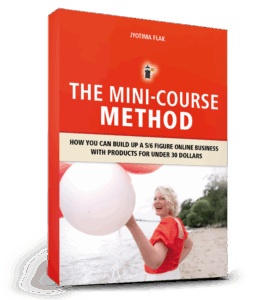
If you would like help creating your own mini course ecosystem, download my book:
Inside, I show you how to turn your expertise into digital products, mini courses, and automated systems that create more freedom, more impact, and more income.
Start small.
Stay consistent.
Build your lighthouse business one step at a time.