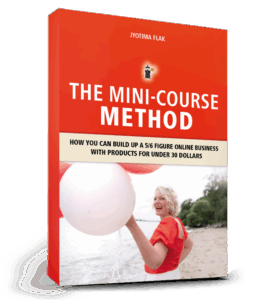
The Mini-Course Method: How Small Courses Attract Premium Clients
Small courses build trust fast and attract premium clients — without months of work. The Mini-Course Method is a repeatable, strategic approach to creating low-ticket mini courses that convert, nurture, and scale. In this long-form article, you’ll learn why mini courses, digital products, and low-ticket offers work, see real-life examples, and get an actionable strategy to use mini courses as the gateway to higher-ticket offers.
Why the Mini-Course Method works
The Mini-Course Method focuses on fast creation, immediate value delivery, and strategic funneling. Mini courses (aka small courses, low-ticket offers, digital products) are quick to produce, easy for your audience to buy, and powerful at building trust. This is especially true for coaches, therapists, and creators who need to demonstrate results before clients invest in premium programs.
Quick wins beat perfect products
When you create a mini course, your audience gets immediate results. That quick win builds confidence in your teaching and in you as a creator. A mini course is less about being comprehensive and more about delivering a clear, transformational result in a short time.
The common mistake: going big too soon
Many new creators assume they must launch a large signature program to be taken seriously. The result: months in production, technical overwhelm, and no proof of concept. With the Mini-Course Method, you validate your idea quickly, learn what sells, and iterate — all while generating income and building your audience.
Real-life examples: mini courses that attracted premium clients
Here are short case studies showing the Mini-Course Method in action:
-
Stress Management Coach – Created a $29 mini course “Calm Down in 10 Minutes.” Dozens signed up, and several participants purchased one-to-one coaching.
-
Anxiety Therapist – Launched a short audio mini course with guided exercises. Low price, high trust — several students upgraded to a $2,000 coaching package.
-
My results – I sold 10,000+ mini courses under €50 and generated €217,000 in revenue, plus additional income from upsells inside my evergreen funnels.
See more examples in my digital product ladder
Why mini courses convert: 4 core drivers
- Speed of creation: Mini courses can be built in days, not months.
- Low barrier to entry: A $29–$37 price point reduces friction and increases volume.
- Immediate results: Participants get an ‘aha’ moment — that creates advocates.
- Trust & social proof: Small course buyers become testimonials and case studies for higher-ticket offers.
How to design a mini course
Follow this simple structure to design a converting mini course:
Step 1 – Choose a single outcome
Pick one specific result your audience wants (e.g., “Create a journal in 3 hours,” “Reduce evening anxiety in 10 minutes”). Your mini course should promise and deliver that one outcome.
Step 2 – Break it into 3–5 micro-lessons
Each lesson should be practical and action-oriented. Micro-lessons keep production time low and ensure students see progress fast.
Step 3 – Deliver formats that fit your audience
Video, audio, PDFs, or a combination. Therapists may prefer audio exercises; coaches often use short video lessons and worksheets.
Step 4 – Add one clear next step (upsell)
At the end of the mini course, present a clear next step: a premium course, a group program, or one-to-one coaching. The mini course is the entry point for client acquisition and higher-ticket sales.
Pro tip: Use an email sequence after purchase to nurture students for 7–14 days – deliver extra value, show transformations, then invite them to your offer.
Marketing the mini course
Mini courses work best inside a simple funnel:
-
Ad or organic post → Landing page with strong value proposition → Mini course checkout
-
Post-purchase email sequence → Upsell to a higher-value offer
-
Optional webinar or workshop to convert buyers into higher-ticket clients
Because mini courses are low-ticket, you can afford paid traffic tests and fast iteration. Track conversions and tweak messaging until you find a winning angle.
See my step-by-step Canva tutorial
Examples of mini course topics
Here are topic ideas that work well as mini courses for coaches and therapists:
- “Create your first journal in 3 hours” (KDP / low content)
- “5-minute anxiety relief audio exercises”
- “Quick client intake template + first session plan”
- “From idea to first sale: Your 7-step mini product checklist”
Measuring success
Core metrics to track:
- Conversion rate on the mini-course landing page
- Average order value (AOV)
- Upsell conversion rate to premium offers
- Return on ad spend (ROAS) for paid campaigns
Small wins compound: a reliable mini course with a consistent upsell will steadily grow revenue and client acquisition.
Common objections & how to answer them
“Will a mini course make me look cheap?” – No. With professional branding and clear outcomes, mini courses position you as practical and results-driven. The Mini-Course Method demonstrates proof of concept.
“Will people buy low-ticket and never upgrade?” – Some will, but many buyers value the low-risk entry and then upgrade when they see real results. A focused upsell strategy increases upgrades.
FAQ: Mini-Course Method
Q: What is the Mini-Course Method?
A: A strategy to create low-ticket, high-value mini courses that attract clients, build trust, and feed higher-ticket offers.
Q: Do mini courses really attract premium clients?
A: Yes. Small courses serve as a gateway: clients experience value first, then invest in premium programs.
Q: How much should a mini course cost?
A: Typically $29–$37 works best for low-barrier entry, but you can adjust based on niche and audience.
Conclusion: Start small, scale strategically
If you’ve been waiting to build the perfect flagship course, stop waiting. The Mini-Course Method gets you visible fast, builds trust with real results, and becomes a reliable source of premium clients. Mini courses are the beginning of a strategic ladder toward higher-ticket offerings.
Ready to build your mini course and attract premium clients?
Get the exact blueprint I used to scale my business: The Mini-Course Method. Step-by-step instructions, templates, and the funnel strategy to create mini courses that sell and convert into high-ticket clients.